AdultsRestore
The Mental Health Benefits of Sleep-Focused New Year Intentions

Ashley Abramson
Summary
If your New Year goals include feeling calmer, more focused, or more emotionally steady, better sleep should be at the top of your to-do list. This article explores the mental health benefits of sleep, plus how to turn sleep into a sustainable intention that lasts beyond January.
___________________________________________________________________________
Many of us head into a new season wanting to take better care of our mental health, but we often start by adding more to-dos (and, as a result, more stress) to our plates. One of the most powerful ways to boost mental health and overall well-being is surprisingly simple, but often overlooked: sleep.
Sleep isn’t just about waking up rested or energized. Consistent, quality sleep is the foundation of many important physiological processes, from your immune system to cognitive function. When sleep improves, so do many other parts of your life, from emotional regulation and stress tolerance to motivation and productivity. In short, sleep is the ultimate self-care tool.
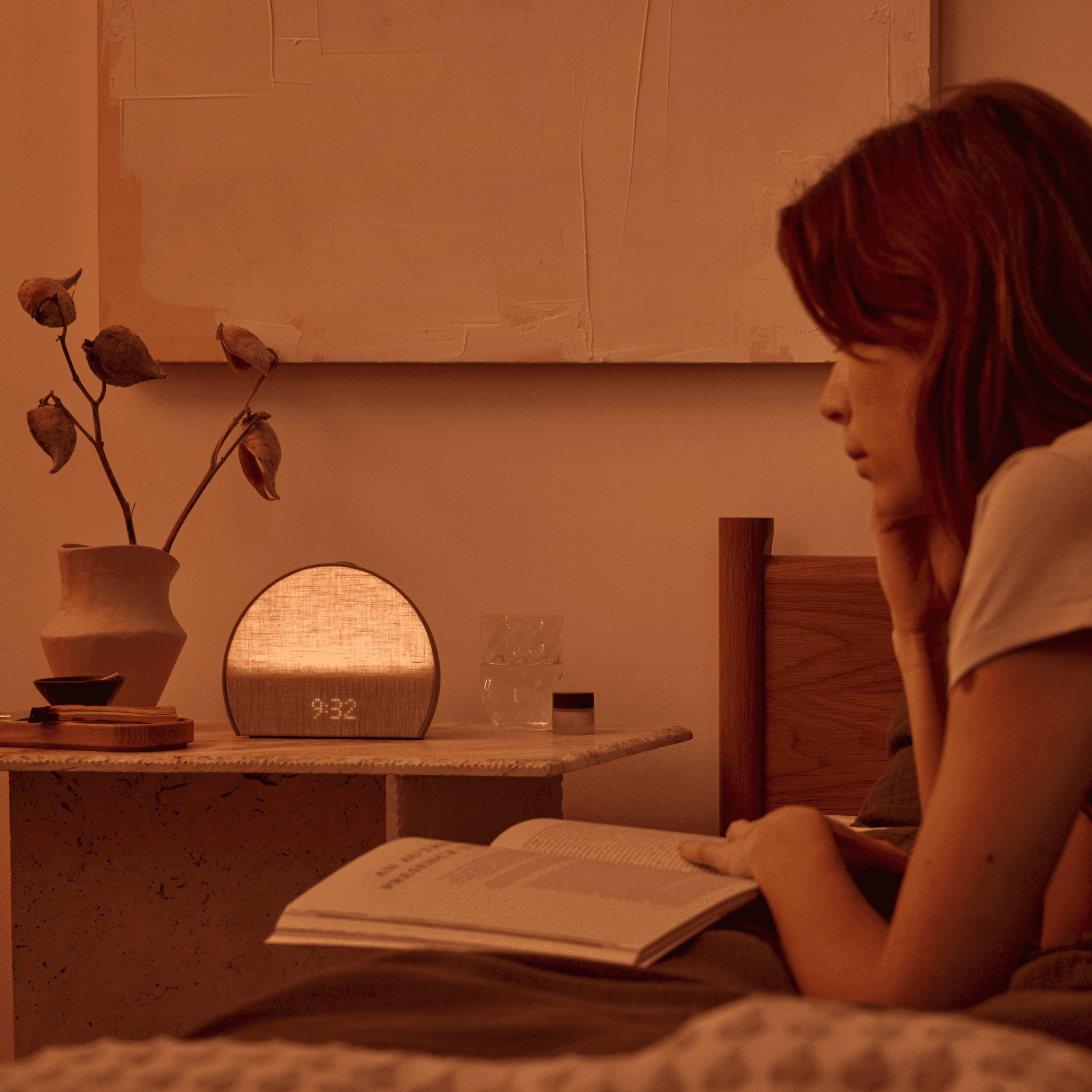
Learn more about the mental health benefits of sleep, and how Hatch Restore can help you build a calming bedtime routine for deeper, restorative rest, night after night.
Table of contents
- The Relationship Between Sleep and Mental Health
- How to Build a Sleep Routine for Mental Health
- Key Takeaways
- FAQs
- References
The Relationship Between Sleep and Mental Health
Sleep and mental health are deeply intertwined, each shaping the other in powerful ways. When sleep is disrupted, your ability to regulate emotions, manage stress, and stay motivated often weakens, too. With consistent, quality sleep, mental health becomes more stable, thanks to your ability to manage your emotions and whatever stressors life throws your way.
Sleep and Emotional Regulation
Ever notice you’re more irritable or moody when you’re sleep deprived? Sleep gives your brain the space it needs to process emotions and reset your emotional response system. When sleep is short or fragmented, the brain becomes more reactive — so you may feel more irritable, overwhelmed, or straight-up crabby. With consistent rest, emotions feel steadier and easy to manage throughout the day.
Sleep and Stress Resilience
When you’re more emotionally balanced, you’ll naturally be able to manage stressors more easily. Sleep helps regulate the stress hormone cortisol, keeping it from staying chronically elevated. When you’re well rested, you’re more resilient, meaning your nervous system can return to baseline more easily after stressful moments.
Sleep and Anxiety
Inconsistent sleep can heighten anxious thoughts by keeping your brain in a hyper-alert state. When your nervous system doesn’t have a chance to fully settle at night, worry often carries over into the next day. Supporting nighttime relaxation can help lower the baseline level of anxiety many people feel during the day.
Sleep and Motivation
Sleep plays an important role in how motivated, focused, and productive you feel because it supports dopamine, the neurotransmitter tied to drive and reward. When sleep is too short, even simple tasks can feel heavy or hard. With better rest, follow-through becomes more natural, and goals feel more reachable.
Sleep and Burnout Prevention
Chronic sleep loss can cause emotional exhaustion by keeping your body in a constant state of recovery without true restoration. Over time, stress may feel heavier and harder to manage. Consistent, supportive rest helps protect against burnout by giving your brain and body a much-needed opportunity to reset.
How to Build a Sleep Routine for Mental Health
Your nervous system loves consistency. Repeating the same sleep routine night after night is not only soothing to your mind and body — it also provides a predictable cue for your body’s internal clock, the circadian rhythm. With consistency, your brain recognizes the cue as a sign to prepare for sleep, and you’ll unwind more easily.
There’s no perfect way to get ready for bed.The best sleep routine for you includes small, repeatable, and relaxing steps. Here are some ideas for where to start, and how Hatch Restore can help.
Start With a Predictable Wind-Down Signal
Sensory cues like light, sound, and other calming routines can create a sense of safety that allows you to fall asleep peacefully. Your Hatch Restore’s Cue to Unwind can remind you with gentle light and sound that it’s time to start shifting gears toward sleep. Then, your Restore will play a personalized sequence of sleepy Sunset Lights and audio that soothe your mind and body for rest.
Protect Your Sleep Timing (Not Just Your Total Hours)
Duration, or total hours, is important — but consistency is the name of the game when it comes to sleep. Going to bed at around the same time every night helps balance your circadian rhythm, ultimately creating a predictable external cue that makes it easier to drift off. If you can, try to wake up at the same time each morning (yep, even on weekends!) for an extra circadian boost.
Have a hard time waking up? A Hatch Restore Sunrise Alarm makes mornings feel gentler by simulating a sunset, so you’ll feel energized and alert but peaceful when you get out of bed.
Create Boundaries With Stimulation at Night
It’s tempting to try and get things done at night — or scroll social media for way too long — but when possible, it’s best to keep stimulating activities like doomscrolling to a minimum. The hour or so before bedtime should ideally help your mind and body transition out of “go mode” and into a more restful state.
One way to support this transition is going phone-free and opting for more relaxing activities, whether journaling, mindfulness meditation, stretching, or listening to a cozy bedtime podcast like The Nightly on your Hatch Restore. If you need a reminder, the Goodnight, Phone feature on Restore can remind you to put away your phone at a pre-set time so you can pivot to your sleep routine.
Use Your Environment to Support Calm
Your sleep space is another great way to cue a state of calm. Comfy PJs and bedding (and maybe a spritz of lavender pillow spray!) can go a long way in setting a cozy tone for bed. To tell your circadian rhythm it’s time to release melatonin, switch off the big light and turn on a soft, warm light on your Hatch Restore. You can also create a calming environment with audio on your Restore, like soothing sound baths, relaxing meditations, and cozy bedtime stories and audiobooks.
Build a Routine That Feels Supportive
As you build your routine, try to focus more on small habits you can stick with rather than “perfect” ones. Tiny-but-achievable habits make you feel like you’re “winning” over time, which increases motivation (and the likelihood you’ll keep up with the habits).
During times of stress, sickness, or travel, you may need to tweak your routine — and that’s OK. Try to stay as consistent as possible when you can, but give yourself grace and pick back up when things stabilize. Your routine will be waiting for you when you’re ready — and hopefully, your well-rested brain will be resilient to challenges in the meantime.
Key Takeaways
- If you’re looking for practical ways to improve your mood, stress resilience, and motivation, consider prioritizing sleep-focused intentions this New Year.
- Building a sleep routine with calming bedtime activities prepares your mind and body for rest while creating cues that make the transition to sleep feel smoother (and mornings more motivating).
- Hatch Restore can help you create a sleep routine that sticks, so you can reap all the benefits of consistent, deeper sleep.
Explore how Hatch Restore can help you create sleep routines that support your mental health and more.
Frequently Asked Questions
Does improving sleep really help with anxiety and low mood?
Yes. Research consistently shows that better sleep supports emotional regulation, lowers stress hormones, and improves overall mood stability. Sleep affects how your brain processes emotion and recovers from stress.
How long does it take to feel mental health benefits from better sleep?
Some people notice changes in mood and stress tolerance within a week of more consistent sleep. Deeper benefits like motivation and emotional resilience often build over several weeks as sleep debt improves.
What if stress is what’s keeping me from sleeping?
This is common. In many cases, predictable sleep cues and routines help calm the nervous system first, which then makes falling asleep easier. You don’t have to solve all stress before improving sleep — they often improve together.
References
- Goldstein, A. N., & Walker, M. P. (2014). The role of sleep in emotional brain function. Annual Review of Clinical Psychology, 10, 679–708. https://doi.org/10.1146/annurev-clinpsy-032813-153716
- Jurgelis, M., Boardman, J. M., Coxon, J. P., Drummond, S. P. A., & Chong, T. T.-J. (2022). Sleep restriction reduces cognitive but not physical motivation. Nature and Science of Sleep, 14, 2001–2012. https://doi.org/10.2147/NSS.S368335
- Kahn, M., Sheppes, G., & Sadeh, A. (2013). Sleep and emotions: Bidirectional links and underlying mechanisms. International Journal of Psychophysiology, 89(2), 218–228. https://doi.org/10.1016/j.ijpsycho.2013.05.010
- Meerlo, P., Sgoifo, A., & Suchecki, D. (2008). Restricted and disrupted sleep: Effects on autonomic function, neuroendocrine stress systems and stress responsiveness. Sleep Medicine Reviews, 12(3), 197–210. https://doi.org/10.1016/j.smrv.2007.07.007
- Ren, Z., Mao, X., Zhang, Z., & Wang, W. (2025). The impact of sleep deprivation on cognitive function in healthy adults: Insights from auditory P300 and reaction time analysis. Frontiers in Neuroscience, 19, 1559969. https://doi.org/10.3389/fnins.2025.1559969