RestoreAdults
Overcoming Sleep Anxiety: Why It’s Rising & What You Can Do Tonight

Ashley Abramson
Summary
Sleep anxiety involves worry about sleep that interferes with your ability to fall and stay asleep. Simple strategies that help calm your mind and body at bedtime can make nights feel more peaceful, so you can wake up rested and ready for the day.
__________________________________________________________________________
Bedtime should be relaxing, but for some of us, it can feel like a lot of pressure. You know sleep is important for your energy, mood, and overall well-being, which only makes it more stressful when it doesn’t come easily. Maybe you have an early meeting or big test, or you’re up late worrying about tomorrow’s to-do list, but you spend all night stressing about not sleeping instead of actually drifting off. These racing thoughts can work against you, leaving you tense and restless when your body needs calm the most.
Sleep anxiety, also called orthosomnia, can interfere with your ability to fall and stay asleep. But luckily, worrying about getting enough quality rest doesn’t have to rule your nights. A few simple tweaks to your evening can help your mind and body settle, so you can get the quality sleep you need to thrive — without the frustrating side of fight-or-flight.
Below, we’ll cover why sleep anxiety happens, and how building a relaxing sleep routine on Hatch Restore can help nip your sleep stress in the bud, starting tonight.
Table of contents
- What is Sleep Anxiety?
- Simple Ways to Calm Your Mind Before Bed
- How Hatch Restore Can Help You Unwind
- Key Takeaways
- FAQs
- References
What is Sleep Anxiety?
Sleep anxiety is the stress of trying to fall asleep that actually keeps you awake. For some people, it escalates to a hyperfixation on sleep quality called orthosomnia. If you have sleep anxiety, you might find yourself staring at the clock or ruminating on whether or not you’ll get enough sleep to feel rested the next day. All this worry might seem helpful at first — after all, sleep is important — but you’ll likely end up spending more time tossing and turning than actually resting.
Worrying about sleep (or anything, for that matter) activates your fight-or-flight response, which keeps your mind and body in an alert, tense state instead of the relaxed vibe you need for sleep.
Why Sleep Anxiety is on the Rise
Sleep anxiety often comes from a well-meaning place: You care about sleep because you know your body and mind need it to function well (we get it). More science is always emerging about the importance of sleep for physical and mental health, and that’s a good thing. But being inundated with “sleep is important” messages can cause something that’s supposed to be restorative to feel high-stakes. Coupled with daily stress and the demands of a busy schedule, sleep can feel more like a chore than an opportunity for self-care.
How Technology Fuels the Problem
Sleep tech can be helpful in certain situations (hi, we’re Hatch!). But for those of us with sleep anxiety, wearables and sleep trackers can add stress to the equation (Zzz equation)?. Thinking even more about sleep or hoping your metrics improve can make it hard to unwind at bedtime, which is counterproductive when it’s time to relax.
Doomscrolling is another contributor. If you can’t sleep at night, you may end up staring at your phone, and blue light from screens can throw off your circadian rhythm. Plus, content you look at or watch on your phone can keep your mind alert and active when it’s time to rest.
Simple Ways to Calm Your Mind Before Bed
Deep breaths: The last thing you need is to worry about worrying about sleep. Bedtime anxiety isn’t solved by trying harder, but by creating conditions that let your body relax naturally.
As bedtime approaches, pivot to calming activities that prepare your mind for sleep. How you relax for bedtime is up to you. Choose activities you actually enjoy, so you’ll be more likely to stick with them over time. Some ideas to get started:
- Journaling
- Meditation
- Deep breathing
- Stretching
- Reading
- Dimming the lights
- Taking a bath or shower
- Drinking a warm herbal tea
- Burning a cozy candle
- Smelling essential oil
- Listening to a calming podcast
These activities can help you unwind, but they’ll also support a healthy circadian rhythm over time, allowing your body to release the melatonin it needs to help you feel tired and drift off.
How Hatch Restore Can Help You Unwind
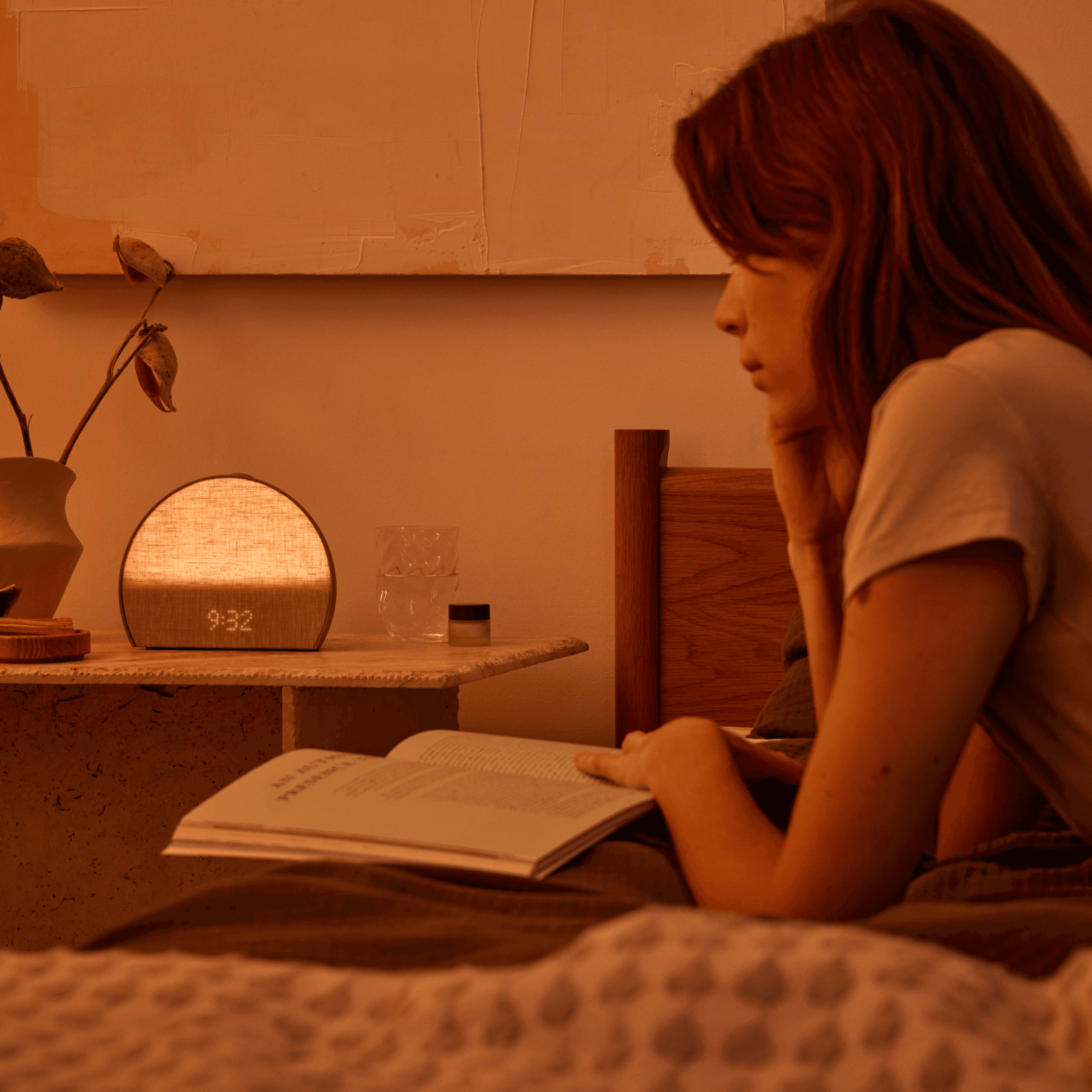
If you need extra support or a reminder to prioritize your bedtime routine, Hatch Restore is here for you. With Restore, you can create a Cue to Unwind that reminds you with a gentle light and sound pairing when it’s time to start getting ready for bed. Calming light transitions and soothing sounds can also replace screen time, resulting in a phone-free sleep routine that helps prepare your body for rest instead of creating an anxiety loop.
You can also set an Unwind Routine, which are personalized playlists of light and audio content created to help relax your mind and body at bedtime. From funny podcasts and grown-up bedtime stories to calming meditations and breathing exercises, you can choose a routine that helps you settle for rest (and distract you from worrisome thoughts about sleep).
Creating a relaxing sleep routine can involve a little trial and error, but over time, you’ll land on a bedtime ritual that helps quiet anxious thoughts, signals safety to your body, and makes falling asleep feel effortless instead of stressful.
Key Takeaways
- Sleep anxiety, or worrying about sleep before bed or in the middle of the night, can keep your brain active and alert when it’s time to shift gears toward rest.
- Simple, calming strategies can nix stress and support bedtime relaxation, so you can get the sleep you need each night.
- Hatch Restore can help you create rituals that shift your mind and body out of fight or flight, resulting in deeper sleep and more energized mornings.
Need support in creating relaxing bedtime routines? Learn how Hatch Restore can help calm your mind and body for better sleep, so you can wake up refreshed and energized.
Frequently Asked Questions
Can relaxation techniques really help if I’ve struggled with sleep anxiety for a long time?
Yes! Consistency matters more than quick fixes. Practicing the same relaxation techniques (like deep breathing, progressive muscle relaxation, or soothing light and sound cues) teaches your body how to shift out of fight-or-flight mode. Over time, these calming signals retrain your brain to associate bedtime with safety and rest instead of stress.
How can I stop checking the clock when I can’t fall asleep?
Clock-watching fuels anxiety because it reinforces the idea that you’re “losing time.” Try turning your clock away or using a device like Hatch Restore, which helps you focus on relaxing cues, not the minutes ticking by. Reframing the goal from “I have to sleep” to “I’m giving my body a chance to rest” can also make a huge difference in how quickly your mind settles.
What should I do if I wake up in the middle of the night and can’t fall back asleep?
Keep lights dim and avoid reaching for your phone, because the blue light can restart your brain’s alert cycle. Instead, focus on grounding your body: slow breathing, gentle stretching, or listening to a calm soundscape or guided relaxation can help ease you back toward sleep. It’s totally normal for your mind to drift before it settles again. The key is to stay calm, not frustrated.
References
- Chaput, J.-P., Dutil, C., Featherstone, R., Ross, R., Giangregorio, L., Saunders, T. J., Janssen, I., Poitras, V. J., Kho, M. E., & Ross-White, A. (2020). Sleep timing, sleep consistency, and health in adults: A systematic review. Applied Physiology, Nutrition, and Metabolism, 45(10), S232-S247. https://doi.org/10.1139/apnm-2020-0032
- Chellappa, S. L., & Aeschbach, D. (2022). Sleep and anxiety : From mechanisms to interventions. Sleep Medicine Reviews, 61, 101583. https://doi.org/10.1016/j.smrv.2021.101583
- Jahrami, H., Trabelsi, K., Vitiello, M. V., & BaHammam, A. S. (2023). The Tale of Orthosomnia: I Am so Good at Sleeping that I Can Do It with My Eyes Closed and My Fitness Tracker on Me. Nature and science of sleep, 15, 13–15. https://doi.org/10.2147/NSS.S402694